Roasted Vegetables: Preparation Volume and Nutrient Retention
Roasting is a dry-heat cooking method that exposes vegetable surfaces to high temperatures, typically between 200–220°C. This method produces distinct textural changes and flavour developments through caramelisation. Understanding roasted vegetables in batch contexts requires examining both the practical aspects of preparation and the nutrient profiles that result.
Root Vegetables: Carrots, Parsnips, and Potatoes
Root vegetables are among the most commonly roasted vegetables in batch preparation contexts. Their size and density allow for consistent cooking across larger quantities.
Preparation Method
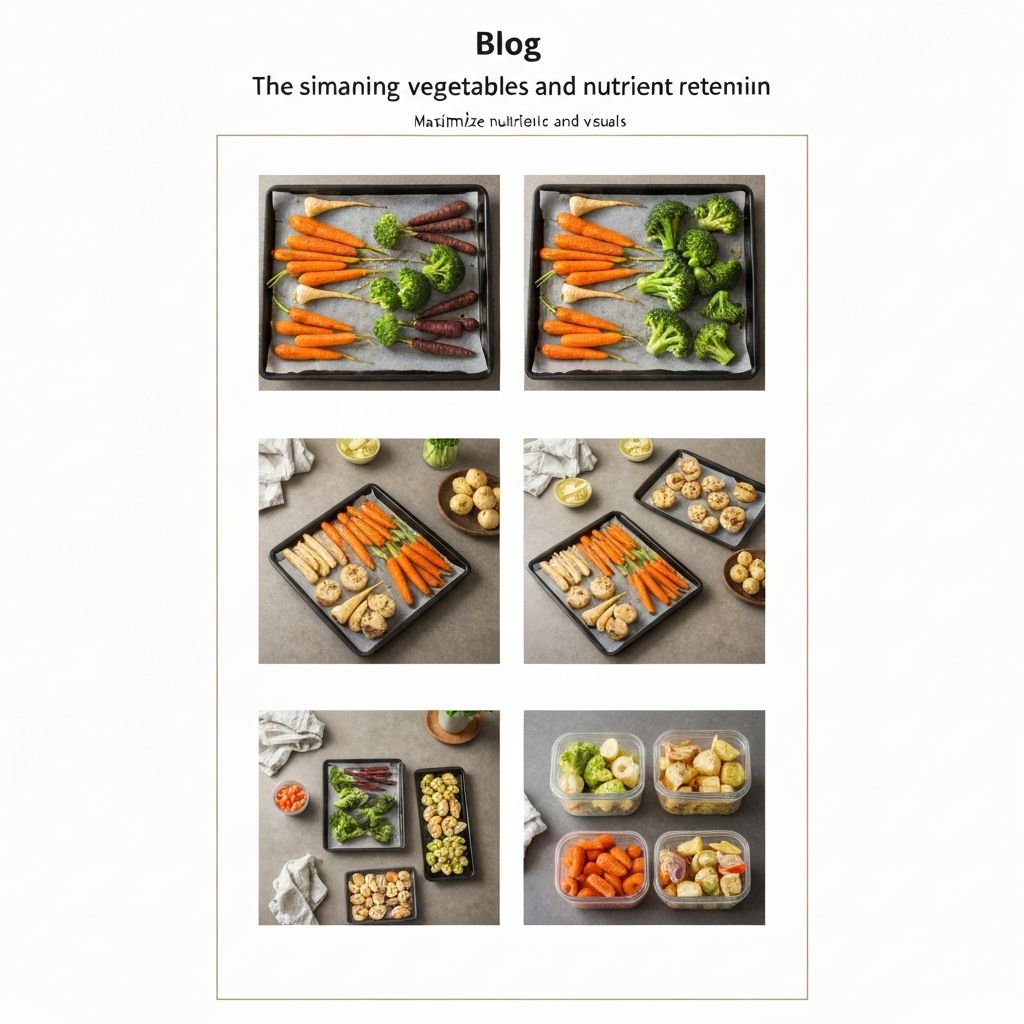
Root vegetables require peeling and cutting into uniform pieces—typically 1.5–2cm cubes or wedges. Uniform sizing ensures even cooking. The prepared vegetables are then tossed with oil and salt, spread on baking trays, and roasted at 220°C for 30–40 minutes, depending on size and type.
Nutrient Profile
Roasting preserves most nutrients in root vegetables. The dry-heat method prevents water-soluble vitamin loss through leaching, which occurs with boiling. Beta-carotene (a precursor to vitamin A) is stable during roasting. Fibre content remains unchanged. The caramelisation process creates new flavour compounds but does not substantially alter nutritional value.
Brassicas: Broccoli, Cauliflower, and Cabbage
Brassica family vegetables respond well to batch roasting. Cutting into florets or small pieces allows even heat penetration and browning development.
Roasting Characteristics
Broccoli and cauliflower are cut into florets and roasted at 220°C for 20–25 minutes. The high heat develops brown surfaces through caramelisation. Some people find this browning undesirable; others prefer the resulting flavour. Longer roasting times (up to 30 minutes) produce darker browning and crispier edges.
Nutrient Considerations
Brassicas contain compounds called glucosinolates, which are associated with potential health-protective properties. These compounds are partially broken down by heat. Roasting produces less glucosinolate breakdown than boiling or steaming, making roasting a better choice if nutrient preservation is a consideration.
Storage of Roasted Vegetables
After roasting and cooling to room temperature, vegetables can be refrigerated or frozen. Proper cooling before refrigeration ensures the refrigerator temperature does not rise excessively.
| Vegetable Type | Refrigerator Safe Time | Freezer Duration | Notes |
|---|---|---|---|
| Roasted Root Vegetables | 3–4 days | 3–4 months | Texture changes slightly when thawed but remains edible |
| Roasted Broccoli | 3–4 days | 3–4 months | May become softer when thawed |
| Roasted Cauliflower | 3–4 days | 3–4 months | Similar texture changes as broccoli |
Batch Roasting Efficiency
When roasting vegetables in batch quantities, cooking time increases minimally. Roasting 400g of vegetables requires approximately the same time as roasting 100g when arranged on appropriately sized trays. This is distinct from stovetop cooking, where quantity more directly affects cooking time.
The practical limitation in batch vegetable roasting is typically oven capacity rather than cooking duration. Multiple trays can be roasted simultaneously in a standard domestic oven, though air circulation may be slightly compromised.