Core Principles of Batch Preparation
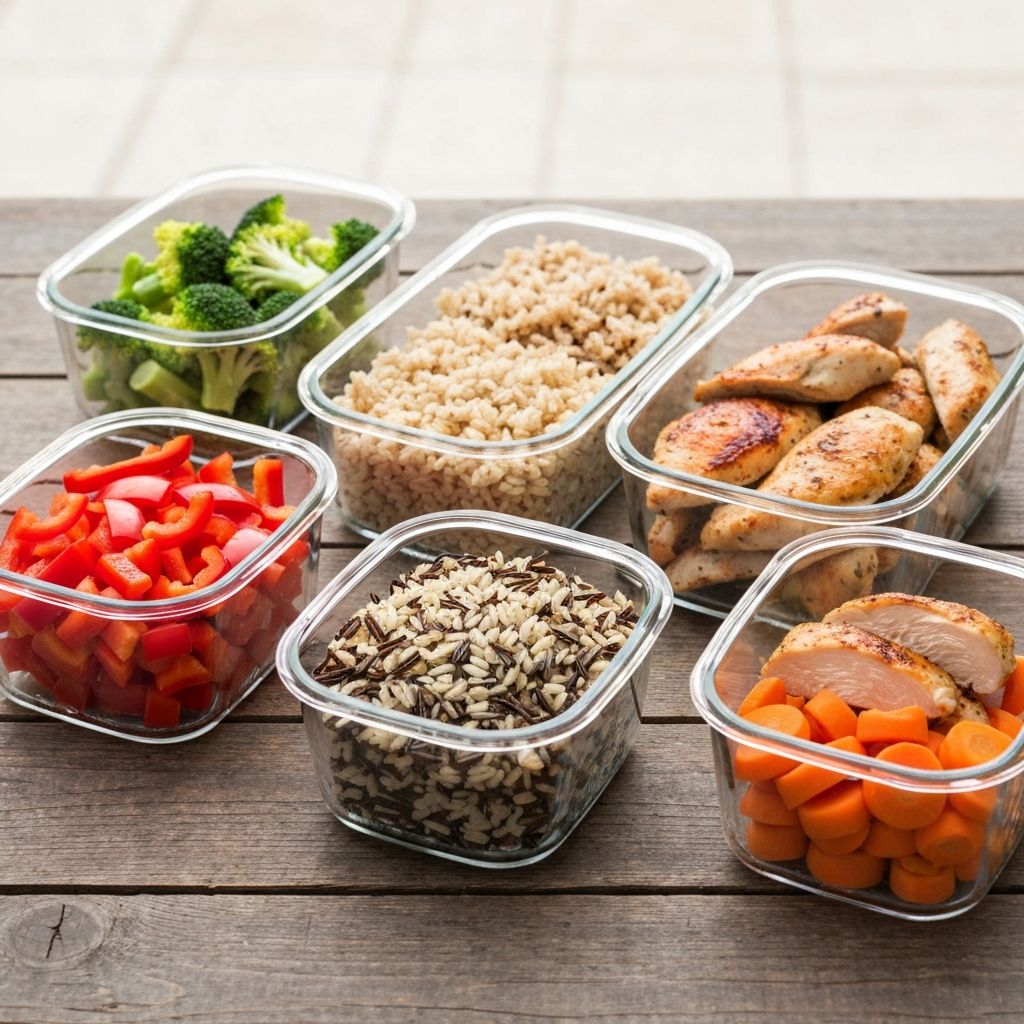
Understanding batch preparation involves recognising how advance preparation of ingredients influences the overall time spent on food preparation throughout a week. The fundamental concept is that consolidating certain cooking activities—such as roasting multiple trays of vegetables or cooking grains in larger quantities—can alter the distribution of effort across multiple days.
Rather than preparing individual meals from raw components each day, batch preparation segments the cooking process. Some components are prepared in concentrated sessions, then portioned and stored for later use. This approach acknowledges that cooking time is not solely determined by what appears on the plate, but also by how preparation work is distributed and organised across time.
The practice has observable effects on food safety, nutrient retention, and the practical organisation of meals. Understanding these effects requires examining both the scientific basis of food storage and the empirical patterns that emerge in everyday cooking contexts.
Food Safety Guidelines for Pre-prepared Meals
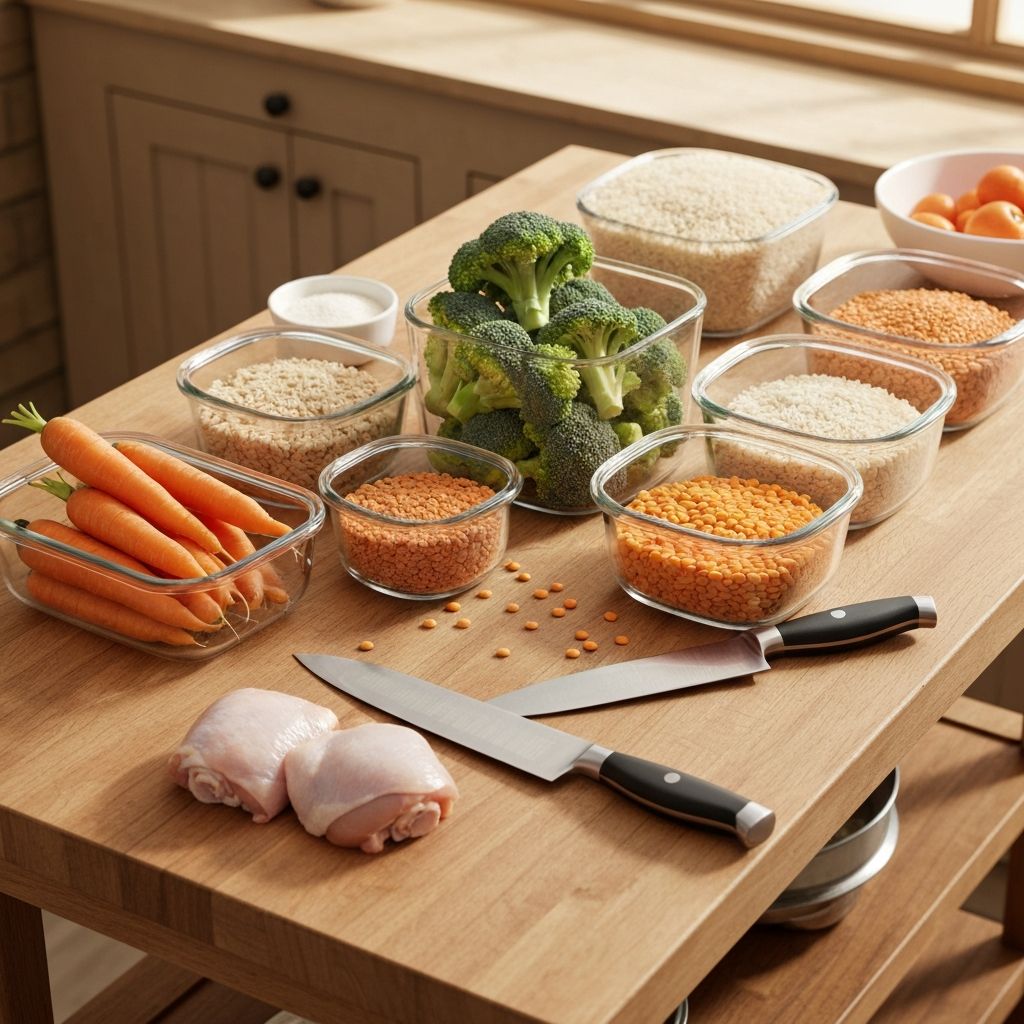
The UK Food Standards Agency provides clear guidance on safe storage of prepared foods. Temperature control is fundamental: refrigerated storage should maintain temperatures at or below 4°C, while freezer storage operates at or below -18°C. These temperature zones serve distinct purposes in food safety management.
The safety of pre-prepared meals depends on several factors: the temperature at which food is stored, the duration of storage, the initial cooking process, and how quickly hot food is cooled before refrigeration. These factors are interconnected—understanding one requires understanding the others.
Ingredient Preparation Time: Single Cooking vs Batch Methods
The following table presents comparative data on preparation time for typical British ingredients using single-cooking and batch-cooking approaches. Preparation time includes all stages from raw component to ready-for-storage state.
| Ingredient | Quantity | Single Cooking Time | Batch Cooking Time (8x quantity) | Time per Portion (Batch) |
|---|---|---|---|---|
| Chicken Breast | 200g | 25-30 mins | 35-40 mins | 4-5 mins |
| Minced Beef | 250g | 15-20 mins | 20-25 mins | 2-3 mins |
| Brown Rice | 100g dry | 35-40 mins | 40-45 mins | 5-6 mins |
| Roasted Vegetables (mixed) | 400g | 30-35 mins | 35-40 mins | 4-5 mins |
| Lentils (dried) | 100g dry | 25-30 mins | 30-35 mins | 3-4 mins |
Batch Cooking Protein Sources
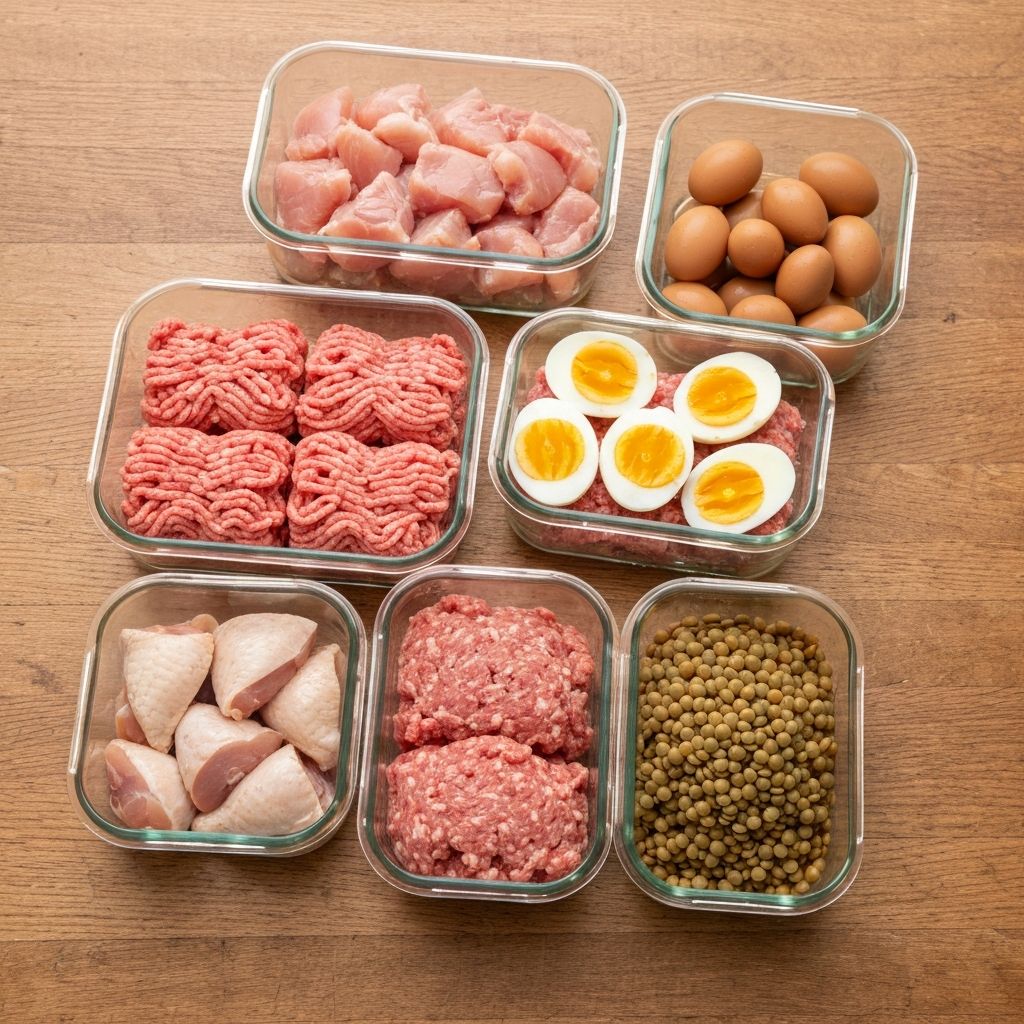
Chicken Preparation
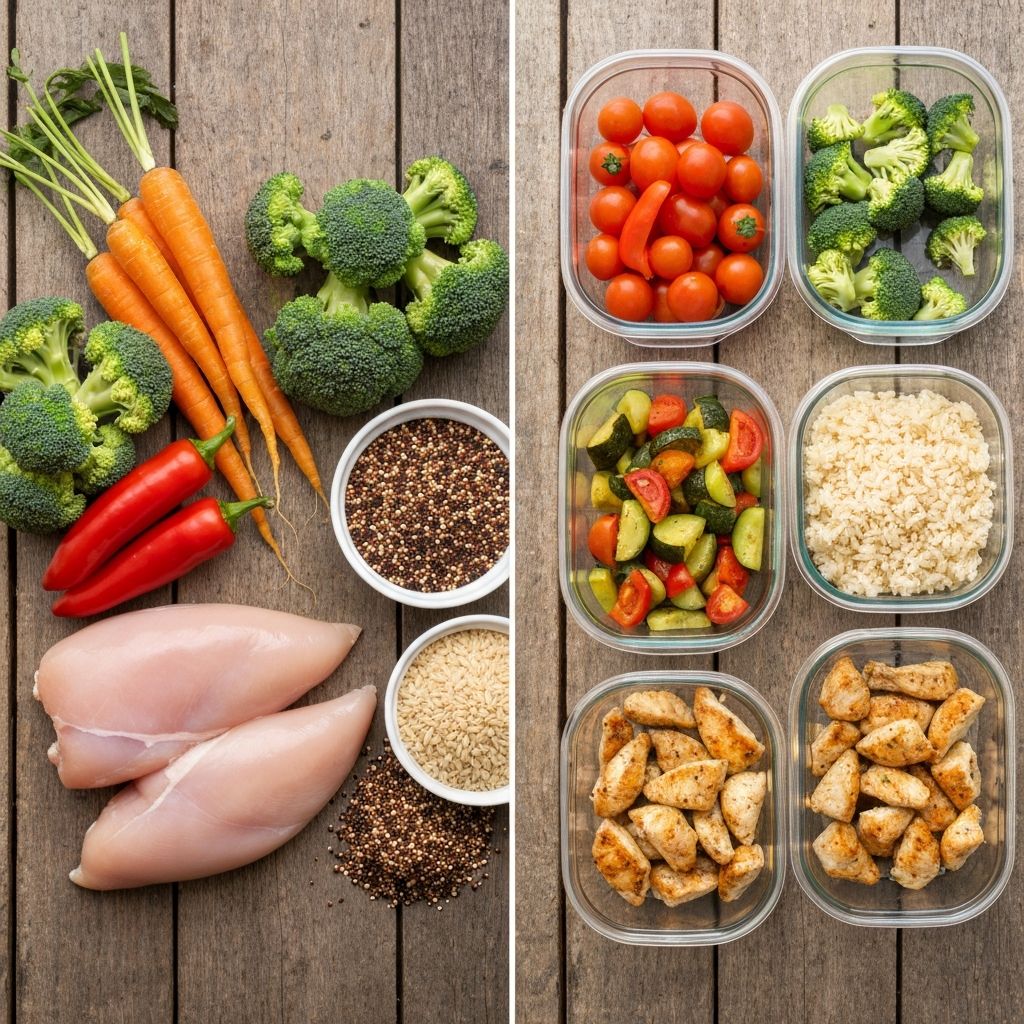
Chicken breasts can be cooked through roasting, steaming, or poaching. In batch contexts, roasting multiple pieces simultaneously on single trays is common. Cooking time remains relatively consistent whether preparing one portion or eight portions, making economies of time marginal compared to preparation-associated tasks.
Minced Meat Preparation
Ground beef or pork benefits considerably from batch cooking. Browning larger quantities in a large pan distributes the cooking time more efficiently than smaller batches. The volume reduction from browning is proportional to quantity.
Pulses and Legumes
Dried lentils and beans require extended cooking times that are largely unaffected by batch size. The efficiency gains in batch preparation are therefore more pronounced than with fresh proteins. One cooking session can produce sufficient portions for multiple weeks when properly frozen.
Roasted and Steamed Vegetables: Preparation Profiles
Vegetable preparation through roasting and steaming shows distinct characteristics when applied to batch cooking contexts. Roasting temperatures typically range from 200–220°C, with cooking times varying from 25–40 minutes depending on vegetable type and size consistency.
Steamed vegetables retain more heat-sensitive nutrients but require different storage considerations. Steaming takes 10–15 minutes for most cut vegetables and produces no browning. Both roasting and steaming serve distinct purposes in meal preparation contexts, and choosing between them involves considering desired texture, flavour outcome, and nutrient profile.
Grains and Legumes: Large-Scale Cooking Profiles
Rice Preparation
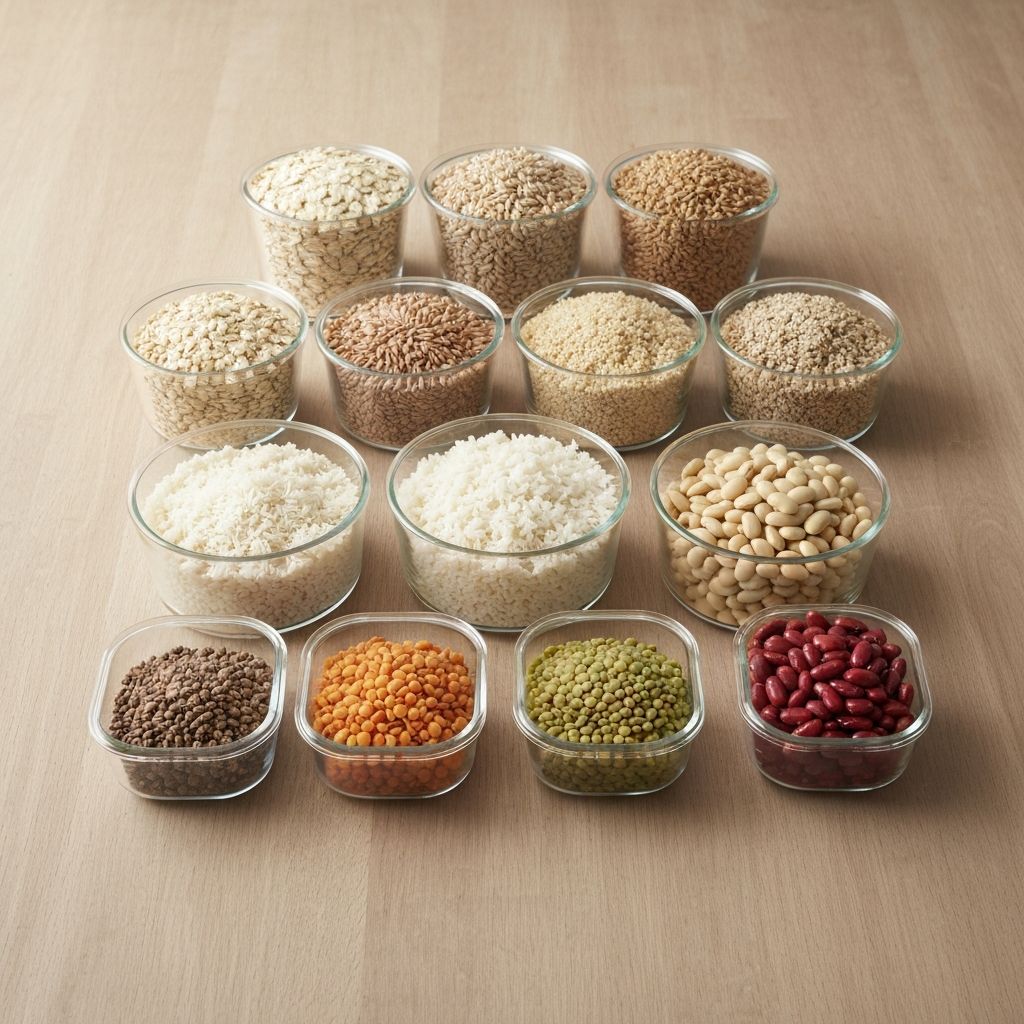
Brown rice requires 35–40 minutes of cooking and benefits from batch preparation because the cooking time for larger quantities remains nearly constant. Cooking 400g of rice takes approximately the same time as cooking 100g when using appropriate cookware. The time-saving advantage is substantial when this principle is applied to weekly meal preparation.
Quinoa and Alternatives
Quinoa cooks in 12–15 minutes and can be prepared in bulk without significant additional time. Its complete amino acid profile makes it a reference point in discussions of prepared-food nutrition, though its cost implications differ from rice or lentils.
Lentils and Beans
Dried lentils cook in 20–30 minutes without prior soaking, making them efficient for batch preparation. Larger beans (kidney beans, chickpeas) require soaking and 1–2 hours of cooking, making them ideal candidates for concentrated preparation sessions followed by freezing.
Soup and Stew Base Preparation for Large-Volume Cooking
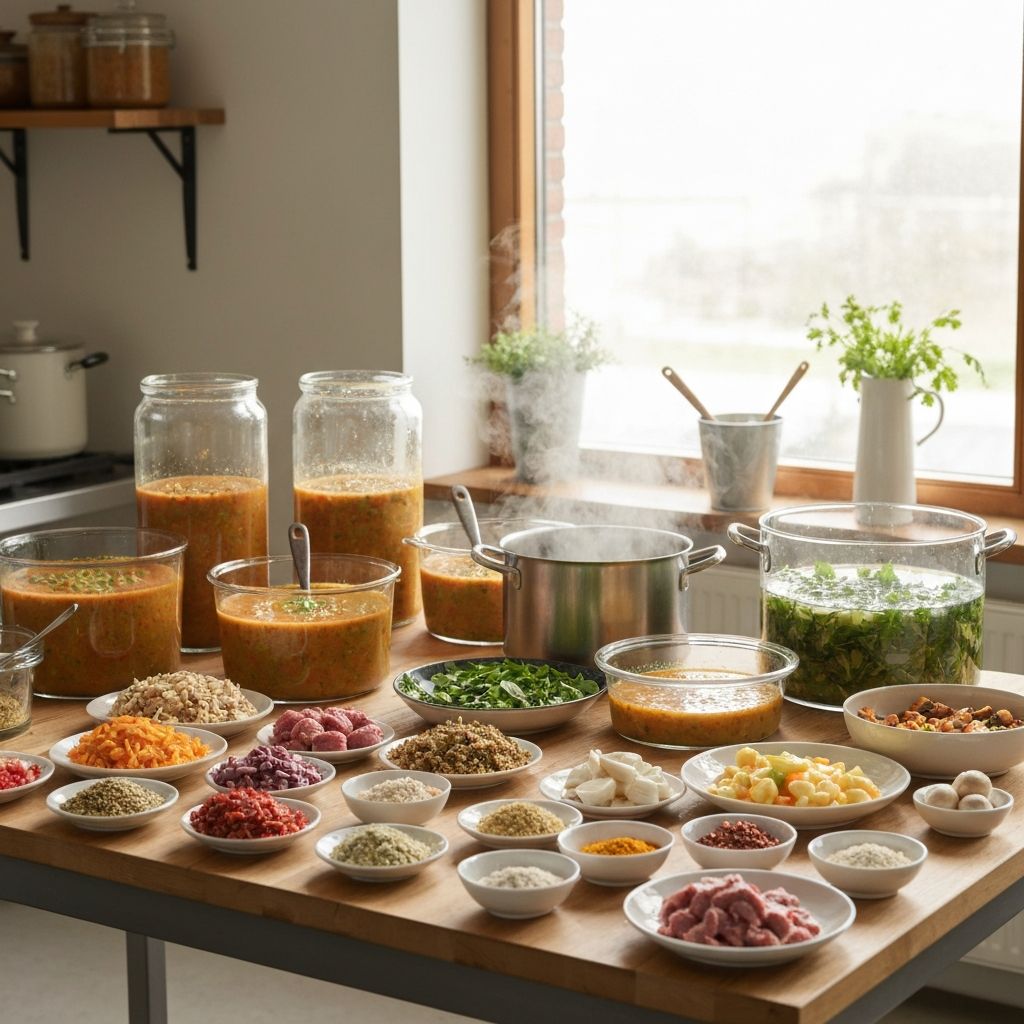
Preparing soup and stew bases in batch quantities demonstrates the efficiency advantages of consolidating cooking activities. A large pot of vegetable stock or meat-based broth can be prepared once, then portioned and frozen for use across multiple weeks.
Standard vegetable stock preparation involves simmering water with onions, carrots, celery, and herbs for 45 minutes to 1 hour. A 4-litre batch requires the same time investment as a 1-litre batch but yields four times the product. This is a clear example of how cooking time per serving decreases substantially with batch cooking.
Stew bases—the foundation of cooked meat, vegetables, and thickened liquid—can similarly be prepared in large quantities. These components freeze well and can be reheated, making them practical for organised meal preparation systems.
The application of these principles depends on having adequate storage space and appropriate containers. For many households, this is the limiting factor rather than cooking time or equipment capacity.
Portioning and Storage Systems for Prepared Components
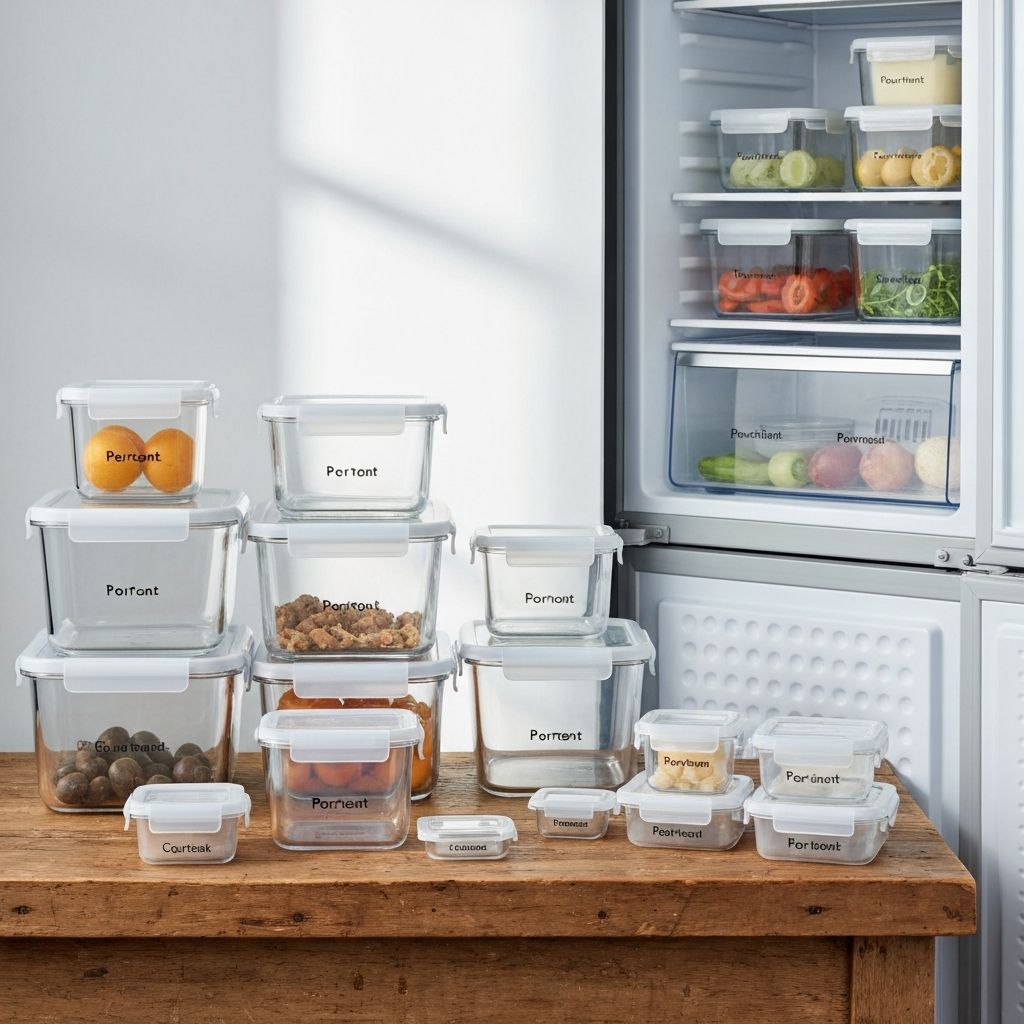
How prepared food is portioned and stored directly affects both safety and usability. Portion sizes depend on intended use—some components are stored in smaller portions for individual meals, while others are stored in larger quantities for cooking flexibility.
Glass containers with tight-sealing lids are widely used for refrigerated storage due to their impermeability to air and ability to withstand repeated temperature cycling. Plastic containers are lighter and more portable but may be permeable to air over long storage periods.
Explore Detailed Resources
The following resources provide detailed information on specific aspects of batch cooking and meal preparation principles:
Batch Cooking Protein Sources
Detailed examination of time and safety considerations for chicken, minced meat, and pulses in batch cooking contexts.
Roasted Vegetables
Comprehensive overview of vegetable preparation, volume considerations, and nutrient retention through roasting.
Grains and Legumes
Detailed profiles of rice, quinoa, beans, and lentils in large-scale cooking applications.
Soup and Stew Bases
Information on batch principles applied to stock preparation and stew base development.
Food Safety Guidelines
UK-based food safety principles for pre-prepared meals, storage temperatures, and safety timelines.
Container Storage Systems
Practical information on portion control, container selection, and refrigerator/freezer organisation.
Observed Patterns in Weekly Meal Organisation
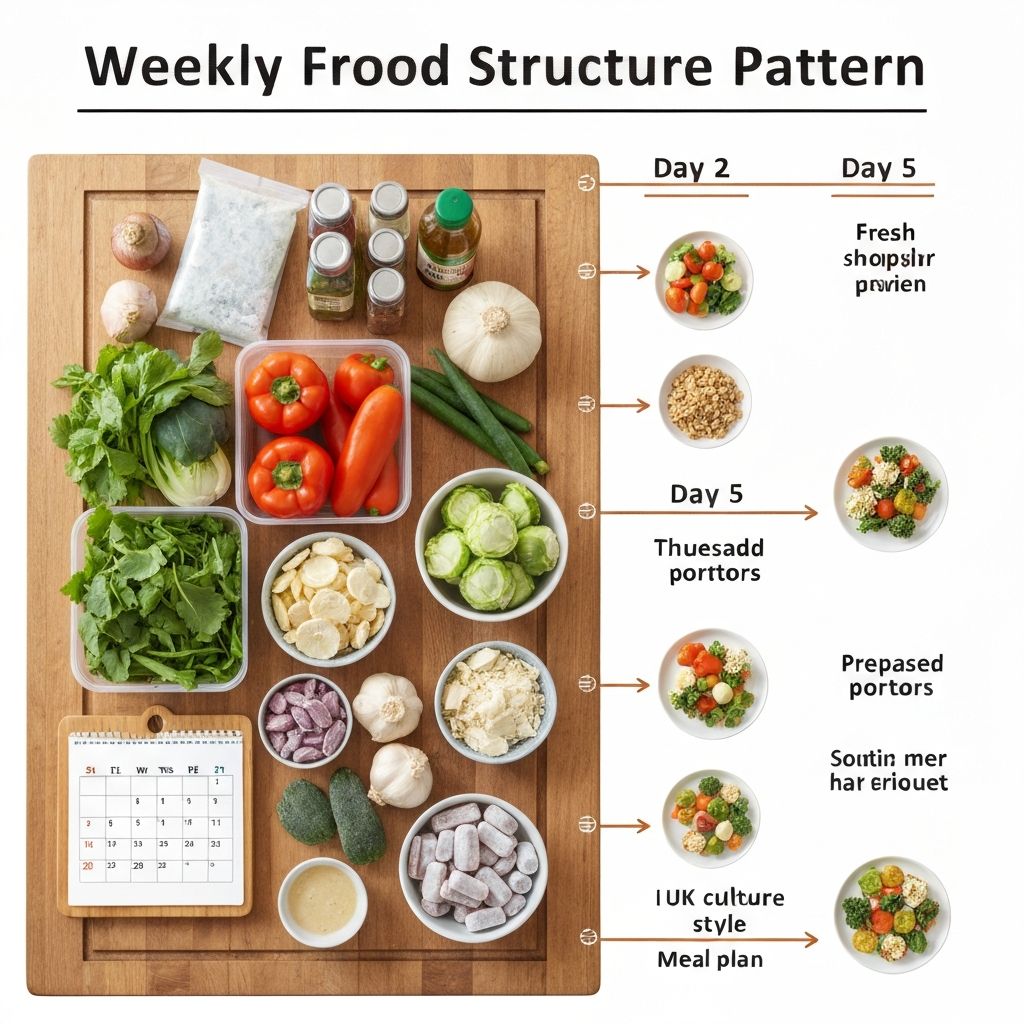
Research examining how people organise meals across weeks reveals recurring patterns. Early-week meals often incorporate recently prepared fresh components. Mid-week meals typically consist of combinations of freshly prepared items and previously frozen components. Later-week meals increasingly rely on frozen or longer-stored components.
This pattern emerges not from planning but from the physical constraints of food storage and the practical reality that fresh-prepared items have shorter safe storage windows than frozen components. Understanding this pattern helps explain why certain preparation strategies prove effective for some households.
The feeling of "control" over meal selection that some people report correlates with having visible prepared components available for combination. This is distinct from the question of whether batch preparation actually saves time or money—it describes how organised preparation affects the subjective experience of meal decision-making.
These observations come from time-use studies examining everyday cooking patterns, not from prescriptive meal planning methodologies. The distinction is important: the patterns describe what people do, not what they should do.
Frequently Asked Questions
The information presented on this site is intended as educational context about food preparation principles, storage guidelines, and cooking methods. It is not personalised advice, and different approaches may be suitable for different contexts and needs.