Soup and Stew Bases: Batch Principles and Storage
Soup and stew bases represent foundational components that can be prepared in large quantities and then used as building blocks for varied meals. Understanding the principles of batch-preparing these bases requires examining both the cooking process and how the finished bases are stored and reheated.
Vegetable Stock Preparation
Vegetable stock forms the foundation of many soups and provides a base for cooking grains and legumes in some preparations. Standard vegetable stock uses onions, carrots, celery, and herbs (bay leaves, thyme, parsley).
Basic Preparation Method
The standard ratio is approximately 2–3 litres of water per kilogram of vegetables. Vegetables are roughly chopped and placed in a large pot with water. The mixture is brought to a boil, then reduced to a simmer for 45–60 minutes. After this time, vegetables are strained out, leaving behind the liquid stock.
Storage of Vegetable Stock
After cooking, stock should cool to room temperature before refrigeration to avoid raising the temperature of other stored items. Cooled stock can be refrigerated for 3–4 days. For longer storage, stock is typically frozen in portions (using ice cube trays for small portions, or containers for larger quantities).
Meat-Based Stock and Broth
Meat-based stocks use bones and meat scraps, along with aromatic vegetables. Chicken stock typically uses chicken bones and carcasses; beef stock uses beef bones; vegetable-based broths use only vegetables.
Chicken Stock Preparation
Chicken bones and carcasses are placed in a pot of water with vegetables and herbs. The mixture is brought to a boil, then simmered for 1–2 hours. The longer cooking time extracts more flavour and nutrients from the bones.
Beef Stock Preparation
Beef stock preparation typically involves roasting bones at 200–220°C for 20–30 minutes before adding them to water. This roasting step develops deeper flavours through caramelisation. After roasting, bones are simmered in water with vegetables for 2–3 hours.
Stew Bases
A stew base differs from stock in that it contains meat and vegetables rather than primarily liquid. A basic stew base includes browned meat, vegetables (such as carrots, onions, and celery), and a thickening agent (such as flour or cornstarch).
Preparation Method
Meat is first browned in a large pot, then removed. Vegetables are then sautéed in the same pot, developing flavour. The browned meat is returned to the pot along with liquid (stock, water, or both). The mixture simmers for 1–2 hours, allowing flavours to develop and meat to become tender.
Batch Advantages for Stew Bases
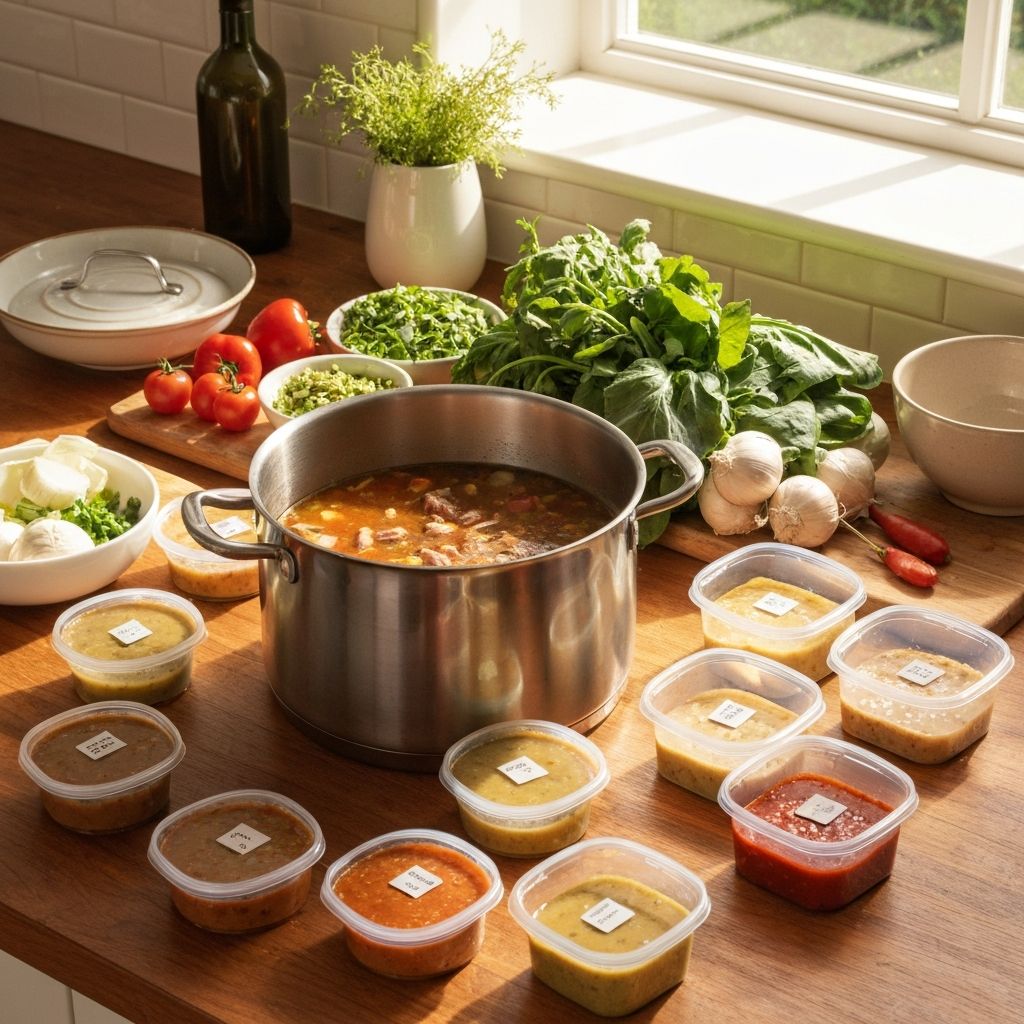
Preparing a large stew base in a concentrated session allows for storage of substantial quantities. A 5-litre pot producing 4–5 portions can be entirely frozen. Each portion can then be reheated as needed, providing variety through different preparations (served as-is as a stew, or used as a base for other dishes).
Storage and Freezing Considerations
| Base Type | Refrigerator Safe Time | Freezer Duration | Reheating Notes |
|---|---|---|---|
| Vegetable Stock | 3–4 days | 3–4 months | Thaw in refrigerator or reheat gently on stovetop |
| Chicken Stock | 3–4 days | 3–4 months | Thaw in refrigerator or reheat gently on stovetop |
| Beef Stock | 3–4 days | 3–4 months | Thaw in refrigerator or reheat gently on stovetop |
| Stew Base (with meat) | 3–4 days | 3–4 months | Thaw in refrigerator or reheat on stovetop; may require gentle reheating to prevent burning |
Application of Frozen Bases in Meal Preparation
Stock and stew bases can be used in multiple ways once thawed or reheated. A vegetable stock can be used as a cooking liquid for grains, as a soup base with added vegetables, or as a braising liquid for meats. A stew base can be served directly as a stew, used to cook additional vegetables in, or combined with other components.
This flexibility allows for variation in prepared meals without requiring complete re-cooking of bases each time they are used. One preparation session produces components that can be configured into multiple meal types across several weeks.
Thawing and Reheating Safety
After thawing, stock should be used within 1–2 days if not immediately reheated. Stew bases should similarly be used promptly after thawing. These are standard food safety guidelines that apply to all meat-containing prepared foods.